Product Direction

Consumer hardware for physical-layer cybersecurity.

Analog Guard is advancing its physical-layer cybersecurity technology from simulation and intellectual-property development into physical prototype engineering, with removable USB hardware and embedded M.2 modules targeted as practical product form factors for future deployment.

Current development status: Analog Guard has moved beyond the concept-only, simulation, and IP stage. Previously developed simulation architectures have been translated into electronic circuit designs, the corresponding schematics have been completed, and PCB layouts for the initial prototype implementation are in progress and nearing completion. The USB and M.2 devices shown on this page are development targets and are not currently commercially available.

The goal

Translate Analog Guard’s physical-layer protection architecture into practical hardware products intended to support protected files, credentials, device access, and recovery workflows without requiring users to manage the underlying mixed-signal complexity.

USB Form FactorM.2 Embedded ModuleHardware-RootedDevice-Bound Recovery

Containment, not replacement

The product direction preserves conventional cryptography and operating-system workflows while adding a hardware-tied physical layer around the protected data path.

Target Product Forms

Two planned deployment paths.

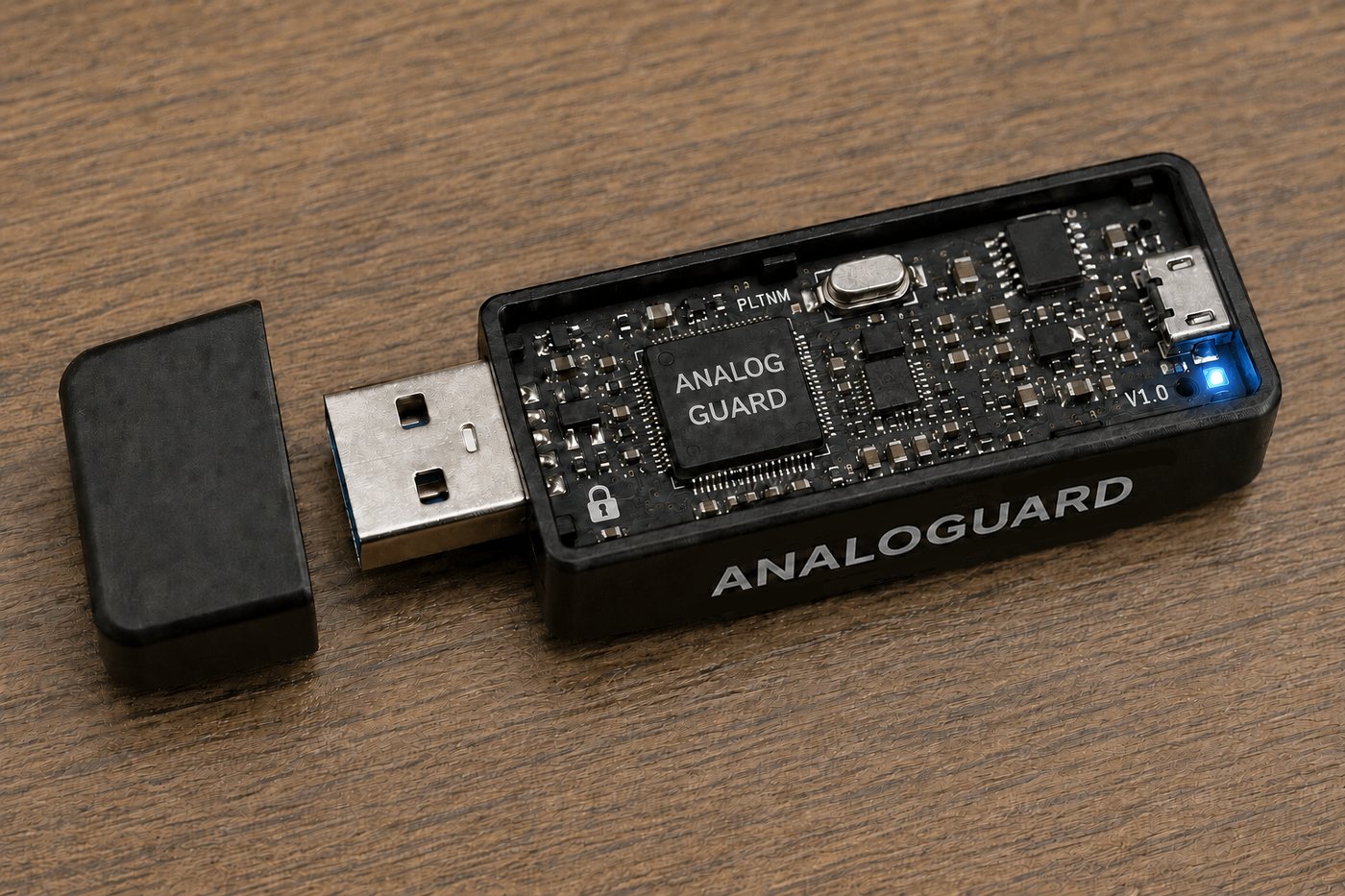
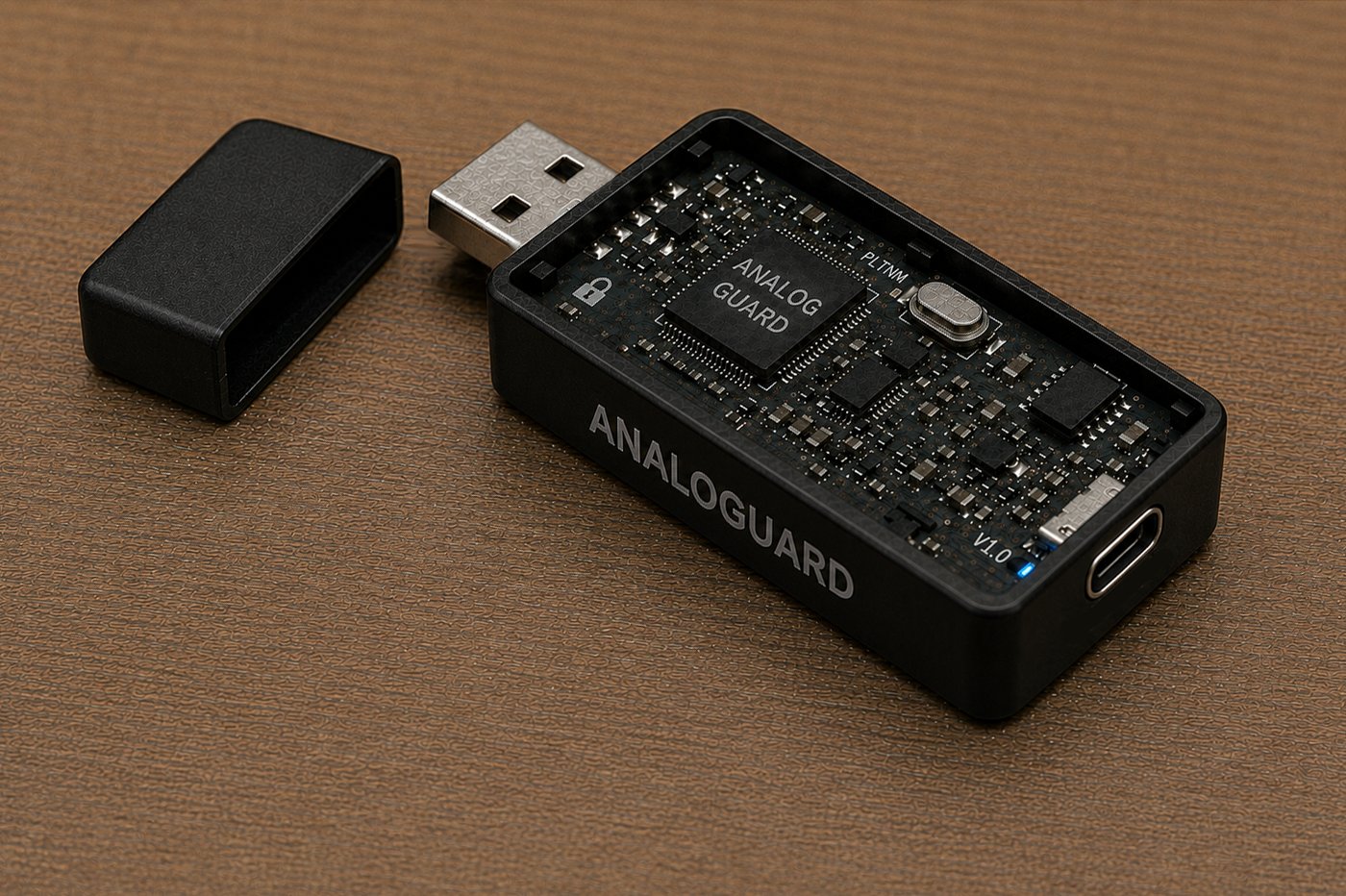
Analog Guard is targeting two initial hardware deployment paths as prototype development progresses. The removable USB path is shown in USB-A and USB-C interface configurations and emphasizes portability and controlled user possession. The M.2 path emphasizes embedded protection inside notebooks, workstations, and future OEM platforms. These are planned product directions under engineering development, not products currently offered for sale.

Development depiction of the targeted Analog Guard USB device showing the USB-A connector and exposed circuitry.
USB-A development depiction
Development depiction of the targeted Analog Guard USB device showing the USB-C port on the opposite end.
USB-C end development depiction

Analog Guard
USB-A / USB-C

A targeted portable hardware implementation intended to bring device-bound physical-layer protection outside the purely software stack. The USB form factor is being developed as a future platform for secure storage, controlled recovery, authentication, and protected-transfer workflows in a familiar removable-device format.

Intended use: portable secure storage and user-controlled hardware security.
Target security posture: protected data would remain dependent on the matching hardware and analog-key environment.
Development objective: validate the core architecture in a portable prototype and establish a path toward future consumer, professional, and enterprise variants.
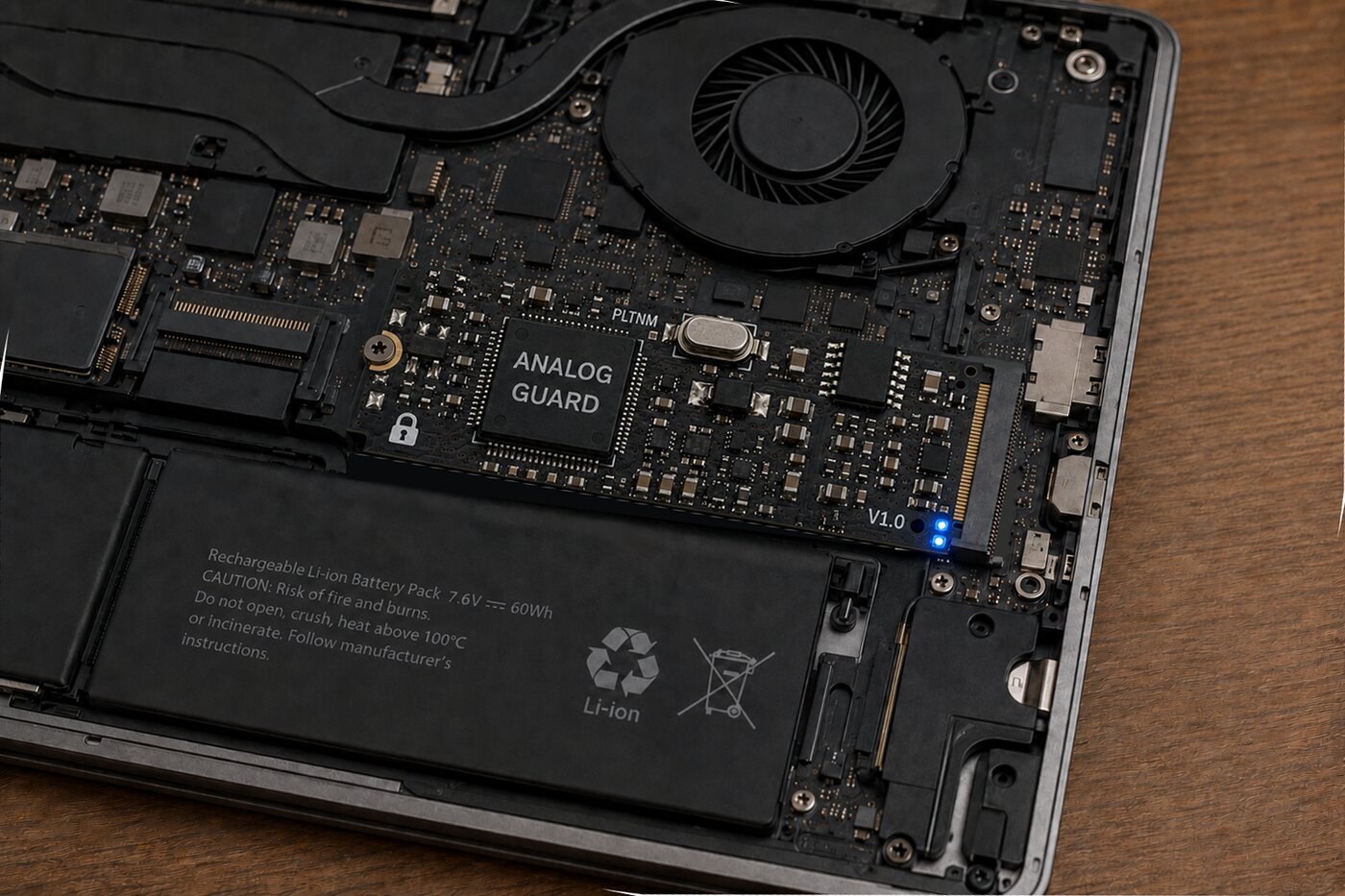
Development depiction of the targeted Analog Guard M.2 module installed and aligned in a notebook computer.

Analog Guard M.2 Module

A targeted embedded implementation for integrating Analog Guard directly into notebook, workstation, and future OEM hardware environments. The M.2 form factor is intended to place physical-layer protection near the system bus and storage path as development advances toward integrated hardware validation.

Intended use: notebook, workstation, embedded, and OEM integration.
Target security posture: authorized recovery would depend on the matched hardware environment rather than possession of data alone.
Development objective: validate an embedded implementation and establish a path toward future OEM modules, professional workstation options, and managed endpoint platforms.
How It Fits

Digital in. Digital out. Physics in between.

The planned consumer hardware implementations preserve the core Analog Guard architecture. The intended protected data path remains tied to physical conditions created inside matched Analog Guard hardware.

01 // INPUT

Digital data enters

Files, credentials, or protected payloads enter through a familiar host-device workflow.

02 // TRANSFORM

Analog state is created

The system translates the protected information into a physical signal environment.

03 // PROTECT

PLTNM applies

Phase-Linked Temporal Non-Linear Modulation changes the signal through hardware-tied analog behavior.

04 // RECOVER

Matched hardware restores

Authorized recovery depends on the matching physical-layer conditions, not merely a copied file.

Development Roadmap

From physical prototype engineering to a product platform.

Analog Guard has progressed beyond concept-only work, simulation, and IP development into physical prototype engineering. Electronic circuit designs have been developed, schematics are complete, and PCB layouts for the initial prototype are in progress and nearing completion. Following layout completion, the next steps are expected to include PCB fabrication, component assembly, hardware integration, and bench testing. The longer-term objective is an integrated product family based on validated hardware.

Prototype fabrication & validation

Fabricate and assemble the initial hardware, then demonstrate end-to-end protection, recovery, reliability, and usability in practical device formats.

Consumer usability

Hide the mixed-signal complexity behind a user experience that feels like a secure drive or installed module.

OEM scalability

Develop form factors that can support licensing, module integration, and platform partnerships.

Product-status note: the USB-A, USB-C, and M.2 images on this page are development depictions of targeted product form factors and interface configurations. They are not photographs of completed production devices, and the products are not currently offered for sale. Final hardware configuration, specifications, industrial design, certification path, manufacturing plan, and commercial availability remain subject to prototype fabrication, integration, testing, validation, and subsequent product development.